Uxbridge property notes
Define outcomes for the Uxbridge property
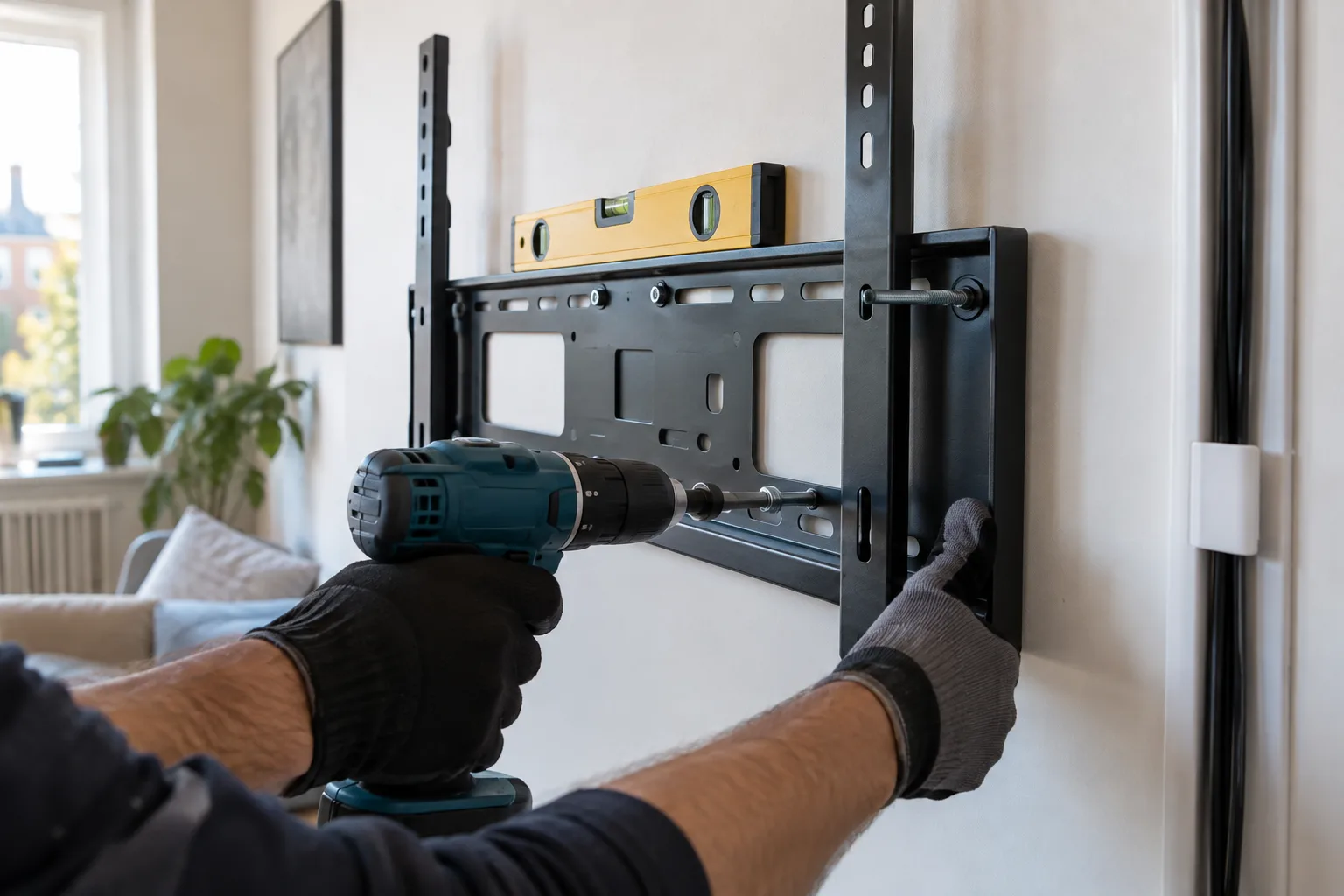
Uxbridge contains houses, flats, maisonettes and newer developments, and internal construction is not uniform even within one property. Solid walls can meet dry lining, stud partitions, tiled areas, timber grounds and service enclosures. A painted or papered surface cannot confirm the material behind it. For wall-mounted furniture, shelving, mirrors, rails or brackets, preparation should account for total load, projection, fixing geometry, frequency of use and the condition of the exact location rather than relying on a broad assumption about the home.
Suitable handyman work may include easing an internal door, adjusting cabinet hinges, changing uncomplicated handles, assembling supplied furniture, fixing appropriate household items, replacing a limited sealant joint and completing an agreed snag list. Identify each room, quantity and intended outcome. Close photographs show the defect or fitting detail; contextual images reveal nearby power points, plumbing, joinery, floors and available working room. Include dimensions, weights, product pages and instructions whenever they are known, while allowing final decisions to follow inspection.
Explain the behaviour of a fault and any unsuccessful repair already attempted. A shelf that has pulled loose may have damaged the surrounding plaster, so fitting a larger plug in the same hole is not automatically suitable. A door that catches at floor level raises different issues from loose hinge screws. The eventual recommendation may involve adjustment, a different fixing point, a contained repair or a dedicated carpenter, decorator, plumber, electrician or structural professional. An accurate diagnosis is more valuable than preserving an assumed method.