Whetstone property notes
Whetstone homes need repair methods chosen at the point of work
Whetstone includes houses, terraces, flats and converted properties with interiors altered over many years. A room may contain solid masonry, old plaster and a newer partition within a short distance. The appearance of the building cannot confirm the wall behind a fitting. Shelves, mirrors, cabinets and rails must be considered with their load, fixing points and the condition of the surface at the proposed position.
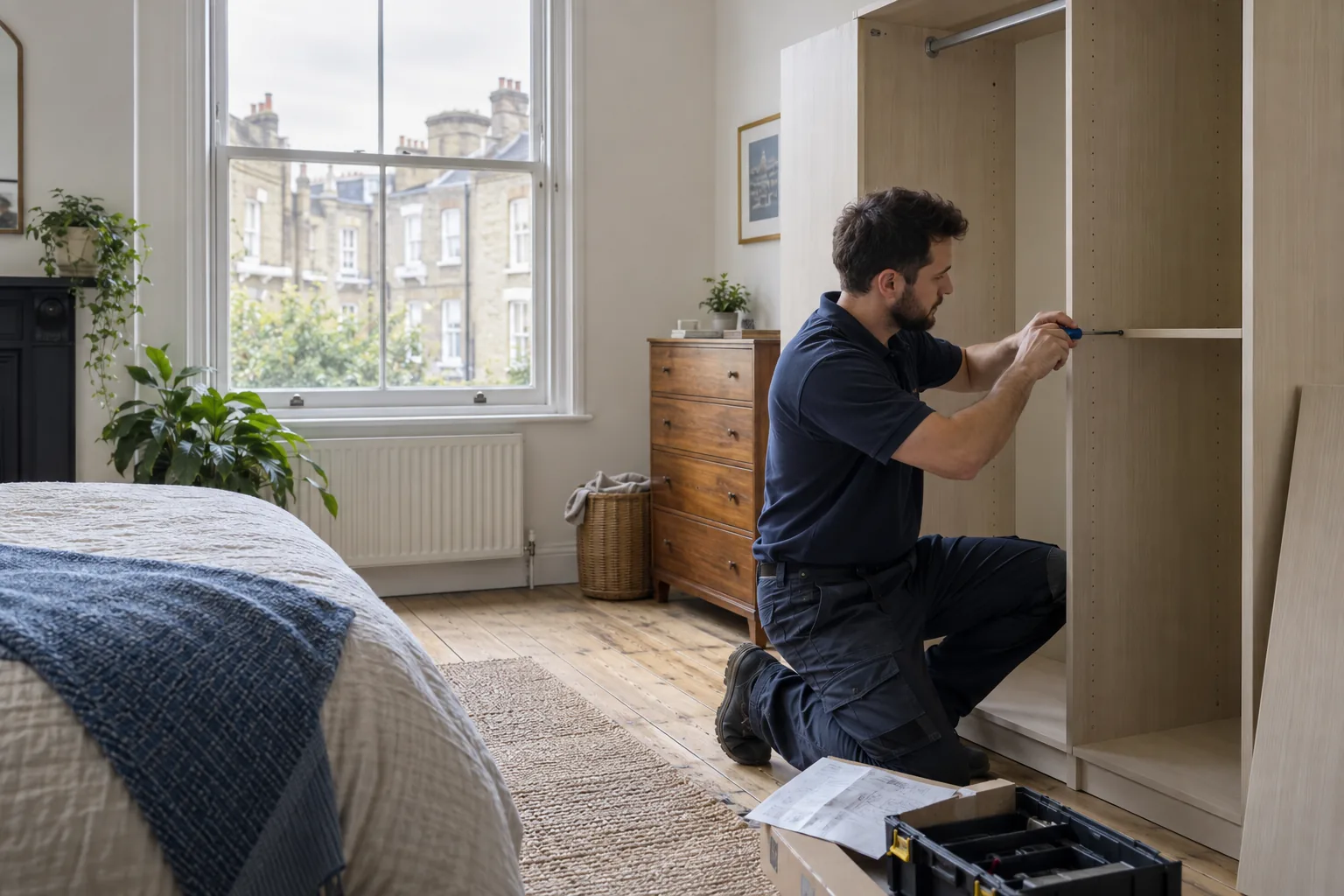
Everyday tasks can include door and cupboard adjustments, loose handles, minor patching, damaged trim, resealing, furniture assembly and wall mounting. Send a photograph of the whole item and a close view of the fault or background. Add measurements and product links. Good evidence improves planning and reveals whether the task belongs with general handyman support, carpentry, decorating, plumbing or another specialist service.
Provide access details early. Parking or loading controls, steps, narrow hallways, communal entrances and floor level can affect handling. A long shelf or boxed wardrobe must reach the room safely. If a tenant or agent will provide entry, state who can approve a change. These questions concern the real appointment and do not suggest that every Whetstone property has the same layout or restrictions. Where work is planned in a home office or occupied room, explain what must remain usable and when calls, visitors or deliveries are expected. The sequence can then be considered without promising that disruption will be eliminated completely.