
Send photographs, product or model details where relevant, your postcode and the result you need.

Tiling · London
London tiling planned from substrate to final grout line
Good tiling is not just straight rows. The base, tile format, layout, movement and edge details all need deciding before adhesive is mixed.
- Kitchen, bathroom and floor tiling
- Layout and cut positions planned first
- Preparation and trims clearly scoped
Send photographs, your postcode and a concise description of the work for a useful first assessment.
Tiling guide
A sound surface comes first
Tiles rely on the substrate beneath them. Loose boards, hollow plaster, contamination, excessive movement or an uneven base can cause cracking and poor adhesion. The existing surface is assessed before the finish is promised; preparation might include removal, local repair, levelling or a suitable backing system.
Wet areas need more than water-resistant grout. The construction and waterproofing approach must be appropriate to the location. Active leaks, damp or movement should be resolved before decorative tiling begins.
 The work, considered in detail
Tiling
Setting out makes the room look considered
A professional layout balances visible cuts, focal lines, corners and fixtures. Starting blindly from one edge can leave an awkward sliver at the other. Large-format tiles magnify uneven walls and floors, while patterned tiles require careful alignment and an allowance for repeat.
Before work, agree tile orientation, grout width, trim colour and the relationship to cupboards, sanitaryware and thresholds. Niches, sockets and exposed valves add cutting and should be visible in the quote.
- Ceramic and porcelain wall tiles
- Kitchen splashbacks
- Bathroom walls and selected wet areas
- Interior floor tiling on suitable substrates
Tiling guide
Choosing tiles and buying enough
Tile dimensions on a box are often nominal, and batches can vary in shade or calibre. Order all material from one batch where possible and include a sensible allowance for cuts, breakage and future repairs. Complex patterns and diagonal layouts require more allowance than a simple grid.
Natural stone and specialist products have particular sealing, adhesive and maintenance requirements. Their suitability should be confirmed before purchase rather than assumed from appearance alone.
Tiling guide
Edges, grout and silicone
Trims, mitred corners, grout and silicone are highly visible parts of the result. Their colours should be selected deliberately. Internal changes of plane generally need a flexible detail rather than rigid grout, while floor perimeters and transitions need appropriate movement allowance.
Grout is not a substitute for accurate joints or waterproof construction. Curing times matter, and newly tiled showers or floors should not be put into service until the specified materials permit.
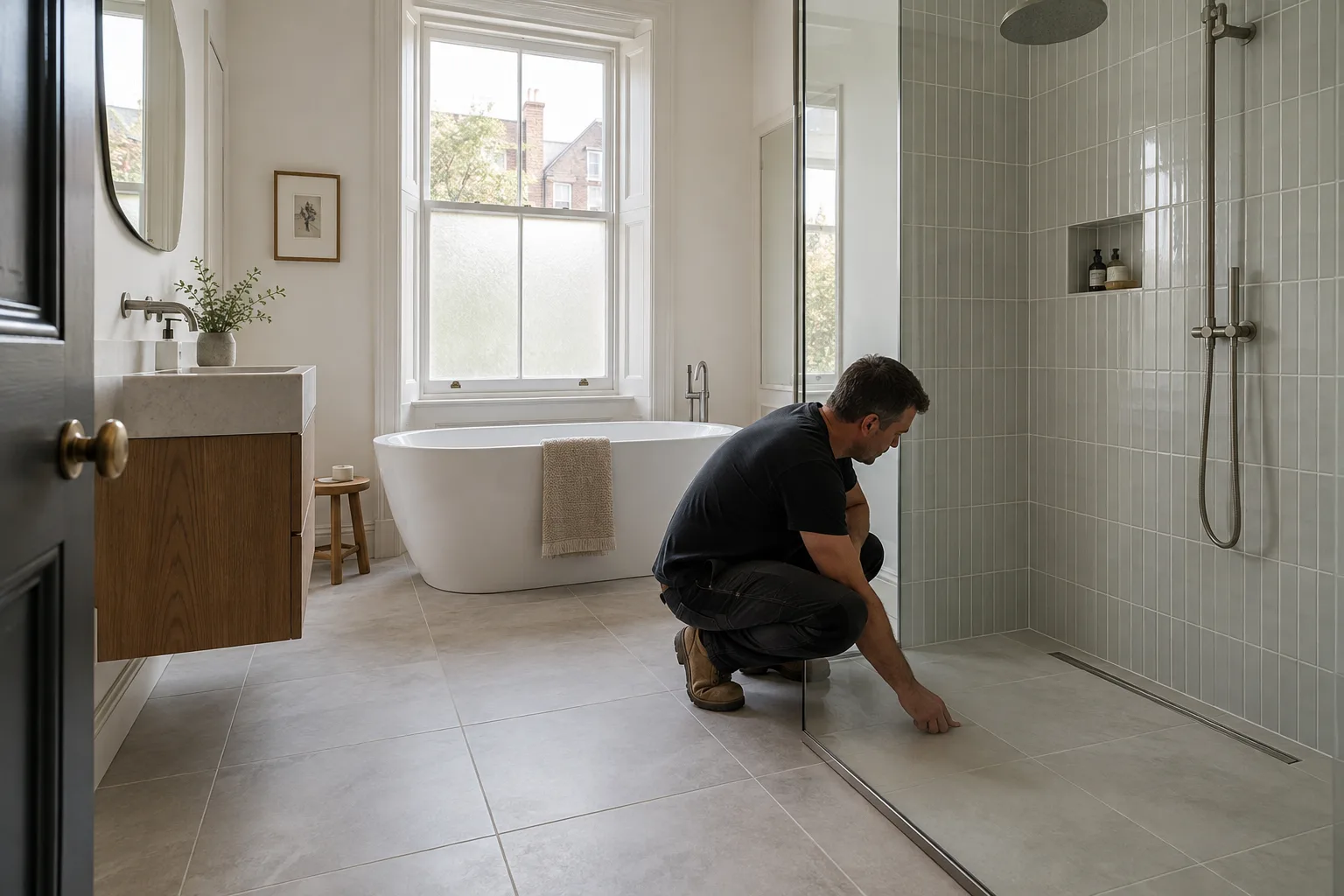 A finish suited to the existing property
Tiling
Working around kitchens and bathrooms
Appliances, worktops, basins and toilets can restrict access. The order of plumbing, carpentry and tiling should be decided before trades overlap. If fixtures are to be removed, responsibility for isolation, refitting and testing must be clear.
In flats, waste handling and cutting locations need planning. Dust and noise should be controlled, and building rules may limit working hours. Clear access helps protect finished surfaces and keeps the installation sequence efficient.
Tiling guide
How tiling is quoted
Square metre rates alone rarely describe the real job. Preparation, tile size, pattern, number of cuts, corners, trims, niches and access all influence labour. A small splashback with many sockets may take longer per square metre than a plain open wall.
A useful quote separates preparation, installation and materials, notes assumptions about the substrate and identifies exclusions. Send photographs, dimensions, tile details and any layout drawings for an initial review.
Tiling guide
Completion and long-term care
At handover, check visible grout lines, trims, silicone junctions and transitions in normal lighting. Keep spare tiles from the same batch for future access or accidental damage. Note when the installation can be walked on, washed or exposed to water, because curing instructions vary by product and conditions.
Use cleaning products suitable for the tile and grout rather than assuming strong acids or abrasives are safe. Seal natural stone where specified and renew flexible sealant when it deteriorates. Movement cracks, loose tiles or persistent discolouration should be investigated rather than covered with another bead of silicone.
Photograph concealed waterproofing or service routes before they are tiled over when the work sequence allows. This record can help with later drilling or repairs. Wall-mounted accessories should be positioned during planning, because drilling a completed tile carries breakage risk and must avoid pipes, cables and waterproof layers.
Keep packaging for grout, adhesive, sealant and any sealer until the job is complete. Product references and batch information are valuable if a local repair is needed. A spare tile alone may not be enough to reproduce the original appearance when the matching grout colour or trim profile has been forgotten.
Underfloor heating, timber floors and recently laid screeds introduce movement and curing considerations that must be known before installation. Heating should follow the relevant commissioning sequence, not be switched on to hurry drying. Thresholds between tiled and adjoining floors also need planning so doors clear and edges are protected.
For occupied bathrooms, agree how long the room will be unavailable and whether another washing facility exists. Adhesive, grout and silicone each have their own curing periods. Rushing use can disturb joints or trap moisture, undermining careful work completed earlier in the process.
A clear visit
From first details to a checked finish
We review access, likely materials and important limitations before the appointment is agreed.
The working area is treated carefully and any material change to the scope is raised before extra work proceeds.
Operation, alignment or finish is checked as appropriate, with practical next steps explained clearly.
Transparent scope
Tiling pricing
The figures are practical labour guidance. The confirmed price depends on the task, access, condition and required materials or parts.
Parking, congestion, specialist parts, disposal and work outside the agreed scope are separate where applicable.
See all price guidance →| Work | Price guidance | Useful detail |
|---|---|---|
| Guide starting price | From £83 | Final price depends on scope, access and materials. |
| Weekday first 30 minutes | £47 | Working-hours labour guidance. |
| Each additional weekday 30 minutes | £36 | After the initial period, where time-based pricing applies. |
| Weekday half day / full day | £260 / £460 | Four-hour and eight-hour labour guidance. |
Your confirmed quote and booking terms take precedence. A material change is discussed before additional work is undertaken.
London coverage
Planned around access to your part of London
Appointments are arranged across London subject to the job, access and schedule. Share the full postcode when enquiring so travel, controlled parking, loading restrictions and building rules can be considered.
For flats, managed buildings and commercial premises, include concierge details, lift booking, permitted working hours and the name of the person authorised to approve the work.
Find your London handyman area →Useful answers
Tiling questions
These answers set out the practical starting point. Photographs and exact product or fault details allow a more specific response.
Can you tile over existing tiles?
Sometimes, if the existing finish is sound, suitable and properly prepared; removal may still be the better option.
How many extra tiles should I buy?
The allowance depends on layout, format and pattern. Confirm quantities after the area and setting out are reviewed.
Is grout waterproof?
Grout alone is not a waterproofing system. Wet-area construction must be suitable beneath the tiles.
Who supplies trims and grout?
Either party can supply them, but exact type and colour should be agreed before installation.
When can I use a newly tiled shower?
Follow the curing times for the adhesive, grout and sealant used; the installer should confirm this at completion.
Can uneven floors be tiled?
They may require repair or levelling first. Tiling should not be used to disguise an unstable base.
Tiling across London
Tell us what needs doing.
Send clear details, photographs and your postcode. We will use them to understand the scope and the sensible next step.