
Send photographs, product or model details where relevant, your postcode and the result you need.
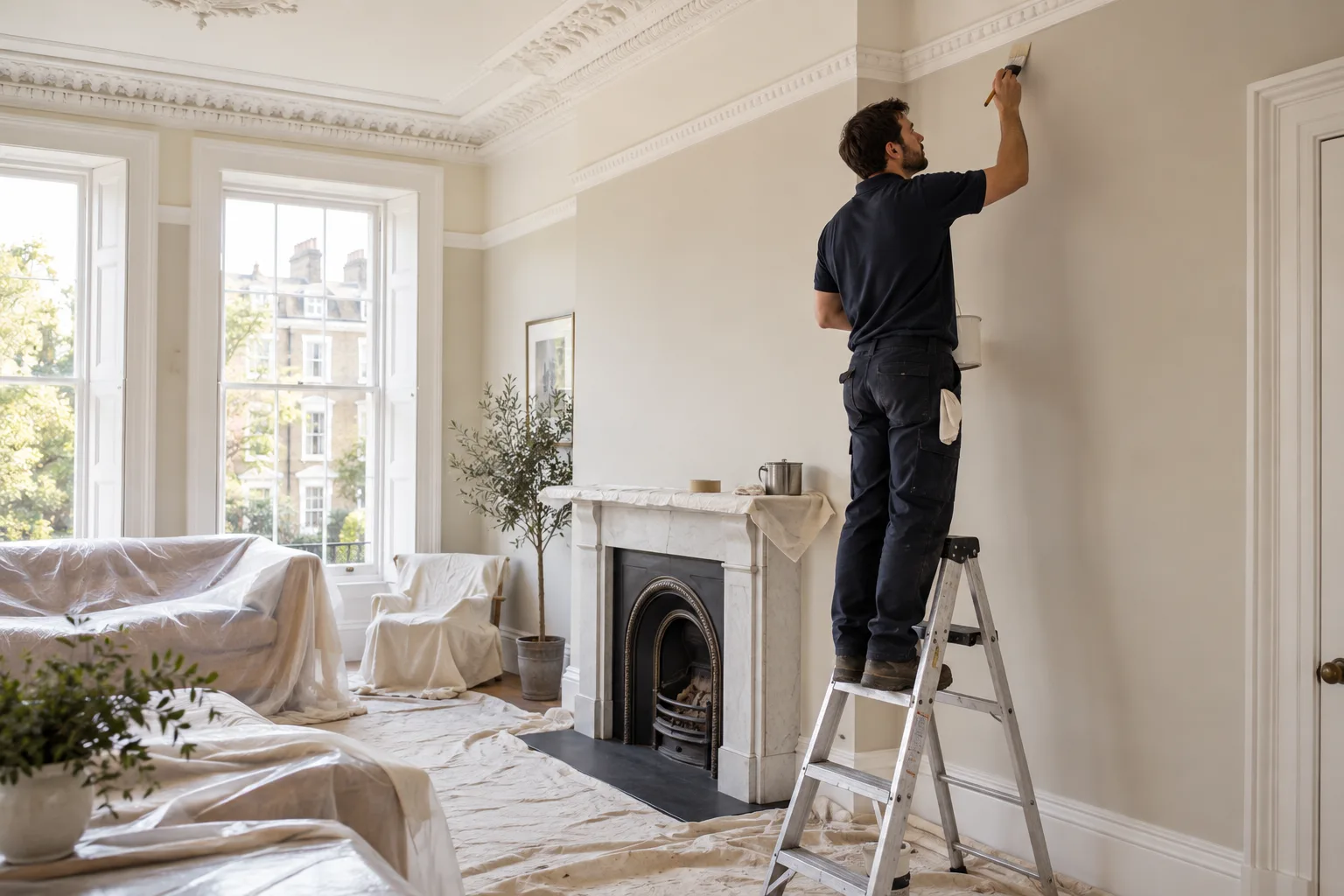
Decorating · London
Interior decorating in London, with preparation taken seriously
A durable finish comes from understanding the surface beneath it. We scope preparation, repairs, products and access room by room before decorating begins.
- Walls, ceilings and interior woodwork
- Preparation matched to surface condition
- Clear colour and finish schedule
Send photographs, your postcode and a concise description of the work for a useful first assessment.
Decorating guide
The finish is only as good as the surface
Fresh paint cannot hide loose material, active damp, unstable filler or poorly prepared gloss. Before quoting, we look at cracking, staining, flaking, previous coatings and the condition of edges around windows, doors and skirting. The preparation may involve cleaning, sanding, filling, local patching and suitable primer.
Cosmetic work should not cover an unresolved leak or persistent moisture. If staining has a current cause, that repair comes first. Once dry and stable, the area can be prepared with an appropriate stain-blocking or sealing system where needed.
 The work, considered in detail
Decorating
Walls and ceilings
Rooms are assessed for surface condition, height, furniture access and natural light. Strong side-light can make roller marks and repairs more visible, while deep colours may need a different approach to coverage and cutting-in. Ceilings with historic movement or previous water damage require particular care.
The scope should state whether small defects are filled, whether larger plaster repairs are excluded and how many coats are allowed for. Colour changes, porous new plaster and heavily marked surfaces can alter product use and labour.
- Wall and ceiling painting
- Local filling and surface preparation
- Feature walls and colour changes
- Previously painted plaster and timber
Decorating guide
Interior woodwork and details
Skirting, architraves, doors and frames receive frequent contact and need a finish suited to wear. Preparation may include degreasing, abrasion, filling and priming exposed material. Painting over glossy or contaminated surfaces without this work often leads to poor adhesion.
Doors and windows need enough curing time before being closed against seals or frames. Hardware can be protected or removed where practical, and the expected sheen should be agreed. Existing brush marks and damaged edges may remain visible unless heavier preparation is included.
Decorating guide
Wallpaper and patterned finishes
Wallpaper depends on sound, even walls and accurate setting out. Pattern repeat, roll batch, wall height and obstacles all affect material quantities. Customers should retain labels and order enough from the same batch because later colour matching may be difficult.
Removal of existing paper can reveal defects not visible during quotation. The scope should explain how discoveries are handled and whether lining paper, additional filling or plaster repair would be priced separately before hanging proceeds.
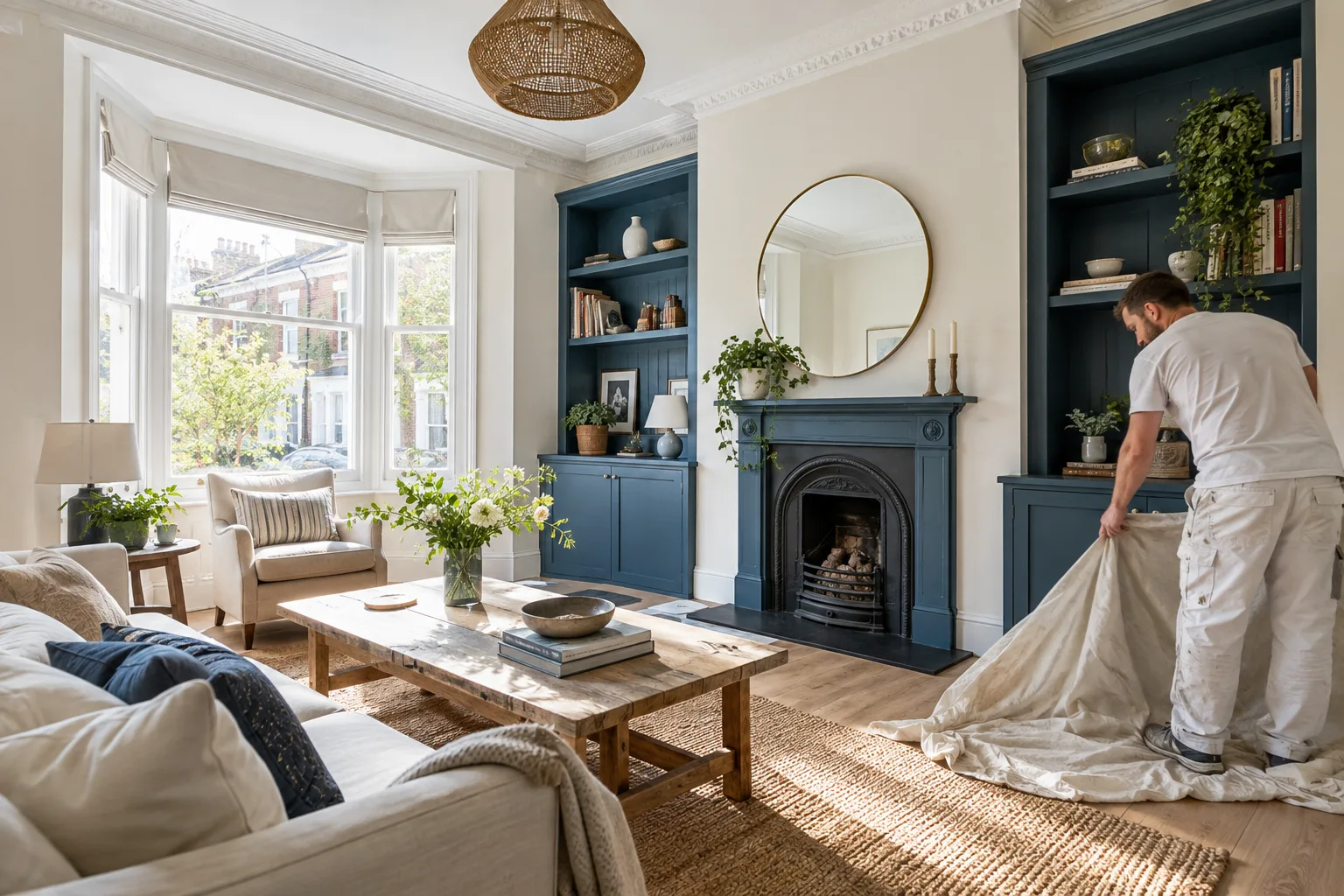 A finish suited to the existing property
Decorating
Working in occupied London properties
In flats and terraced homes, protection and sequencing matter as much as paint. Routes through the property, storage of materials and ventilation should be agreed. Furniture may need moving, but fragile or valuable items should be cleared by the occupant before work begins.
Communal areas, concierge access, parking and permitted hours can shape the schedule. For rental work, colours and the authorised scope should be confirmed by the decision-maker rather than left to the tenant or contractor to interpret.
Decorating guide
A quote you can compare properly
A meaningful quote identifies rooms and surfaces, preparation level, paint system, excluded repairs and who supplies products. A single figure without that detail makes comparisons misleading. We also need to know whether rooms will be empty and whether high areas require special access.
Colour should be confirmed by exact manufacturer and reference, ideally after viewing a sample in the room. Final appearance changes with daylight and sheen, so online swatches are not a reliable approval method.
Decorating guide
Drying, inspection and aftercare
Paint that feels dry may not be fully cured. Avoid washing, pressing furniture against walls or closing freshly coated doors too soon. Ventilation should remove moisture without blowing dust onto wet surfaces, and rooms should stay within the product manufacturer’s recommended conditions.
Inspect finished work in ordinary daylight once coatings have dried. Minor surface texture from the original substrate is different from missed preparation, so the agreed preparation standard matters. Keep the product name, colour reference and batch details for future touch-ups, though aged paint may not blend invisibly.
Plan the room’s return to use rather than moving everything back immediately. Curtain fittings, pictures and shelving can mark a soft coating, while cleaning too soon can create shiny patches. Where several rooms are involved, a staged sequence keeps essential spaces available and reduces the chance that people carry dust through completed areas.
For landlords, a dated room schedule is useful when several neutral colours or finish levels appear similar. It should identify walls, ceilings and woodwork separately. That record makes later maintenance more accurate and prevents an avoidable full-room repaint when only a small matching area needs attention.
Bathrooms and kitchens need products chosen for the actual conditions, but “washable” does not remove the need for ventilation and routine cleaning. High humidity, grease and condensation shorten coating life when their causes are ignored. Product selection, surface preparation and how the room is used all contribute to the result.
A clear visit
From first details to a checked finish
We review access, likely materials and important limitations before the appointment is agreed.
The working area is treated carefully and any material change to the scope is raised before extra work proceeds.
Operation, alignment or finish is checked as appropriate, with practical next steps explained clearly.
Transparent scope
Decorating pricing
The figures are practical labour guidance. The confirmed price depends on the task, access, condition and required materials or parts.
Parking, congestion, specialist parts, disposal and work outside the agreed scope are separate where applicable.
See all price guidance →| Work | Price guidance | Useful detail |
|---|---|---|
| Guide starting price | From £83 | Final price depends on scope, access and materials. |
| Weekday first 30 minutes | £47 | Working-hours labour guidance. |
| Each additional weekday 30 minutes | £36 | After the initial period, where time-based pricing applies. |
| Weekday half day / full day | £260 / £460 | Four-hour and eight-hour labour guidance. |
Your confirmed quote and booking terms take precedence. A material change is discussed before additional work is undertaken.
London coverage
Planned around access to your part of London
Appointments are arranged across London subject to the job, access and schedule. Share the full postcode when enquiring so travel, controlled parking, loading restrictions and building rules can be considered.
For flats, managed buildings and commercial premises, include concierge details, lift booking, permitted working hours and the name of the person authorised to approve the work.
Find your London handyman area →Useful answers
Decorating questions
These answers set out the practical starting point. Photographs and exact product or fault details allow a more specific response.
Do you supply the paint?
Supply can be included or customer-provided; the exact product, colour and quantity must be agreed.
Can you paint over damp stains?
Only after the moisture source is resolved and the surface is dry and stable.
How many coats will a room need?
That depends on colour change, opacity, porosity and surface condition; the quote should state the allowed system.
Must furniture be removed?
Clear access is essential. Small items and valuables should be removed; larger furniture arrangements should be agreed in advance.
Can wallpaper go over imperfect walls?
Minor defects may be prepared, but unstable or badly uneven walls may need lining or plaster repair first.
Can you match an existing colour?
Use the original product reference where possible. Visual matching alone may vary with age, light and sheen.
Decorating across London
Tell us what needs doing.
Send clear details, photographs and your postcode. We will use them to understand the scope and the sensible next step.