Dulwich property notes
Repairs that respect the property already there
Dulwich includes substantial older houses, terraces, mansion-style flats, purpose-built blocks and newer homes. The finish visible in a room may cover masonry, traditional plaster, timber grounds or later dry lining, while previous alterations can introduce boxed services and repaired patches. Secure fitting starts by understanding that surface and the proposed load, not by selecting an anchor from the postcode or the apparent period of the building.
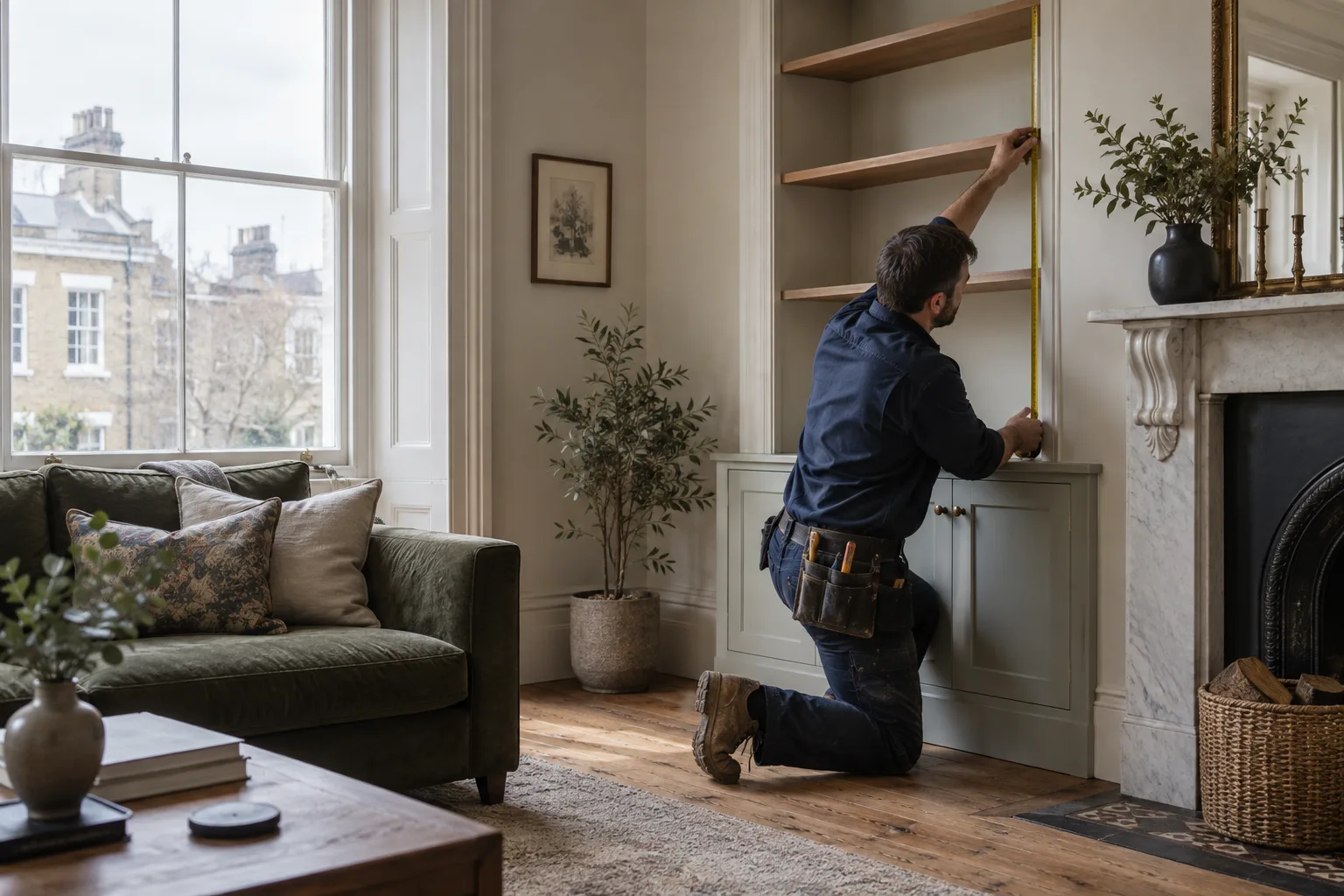
Suitable work may include adjusting internal doors, correcting cupboard alignment, securing handles, fitting suitable mirrors or shelving, assembling furniture, renewing selected sealant and completing an agreed maintenance list. Useful photographs show the detail and the surrounding room. For a supplied item, provide dimensions, weight, instructions and fixing-hole layout. For a fault, describe how it behaves and whether anyone has already attempted a repair.
Original joinery, decorative plaster and established finishes deserve a restrained approach. A stiff door may need hinge work or slight easing rather than an extensive cut. Crumbling material around a former fitting can make reuse unsafe. Where a task risks broader damage or involves a feature requiring specialist knowledge, stopping and recommending the appropriate route is better than producing a quick result at the expense of the fabric.
Permissions also matter. Owners, leaseholders, tenants and managers may have different authority, especially for external features, common parts and visible alterations. Confirm consent before the visit and identify who can decide if the proposed position must change. A tradesperson can follow an authorised brief but should not infer permission from the small physical scale of a task.