Lee property notes
Maintenance planned for Lee houses, conversions and flats
Lee includes period terraces, semi-detached houses, converted properties, purpose-built flats and newer apartments. A room may combine solid masonry, older plaster, later partitions and previous repairs. A cabinet, mirror or rail should be planned from the substrate, condition and intended load. The painted surface alone does not reveal the correct fixing or a safe route around services.
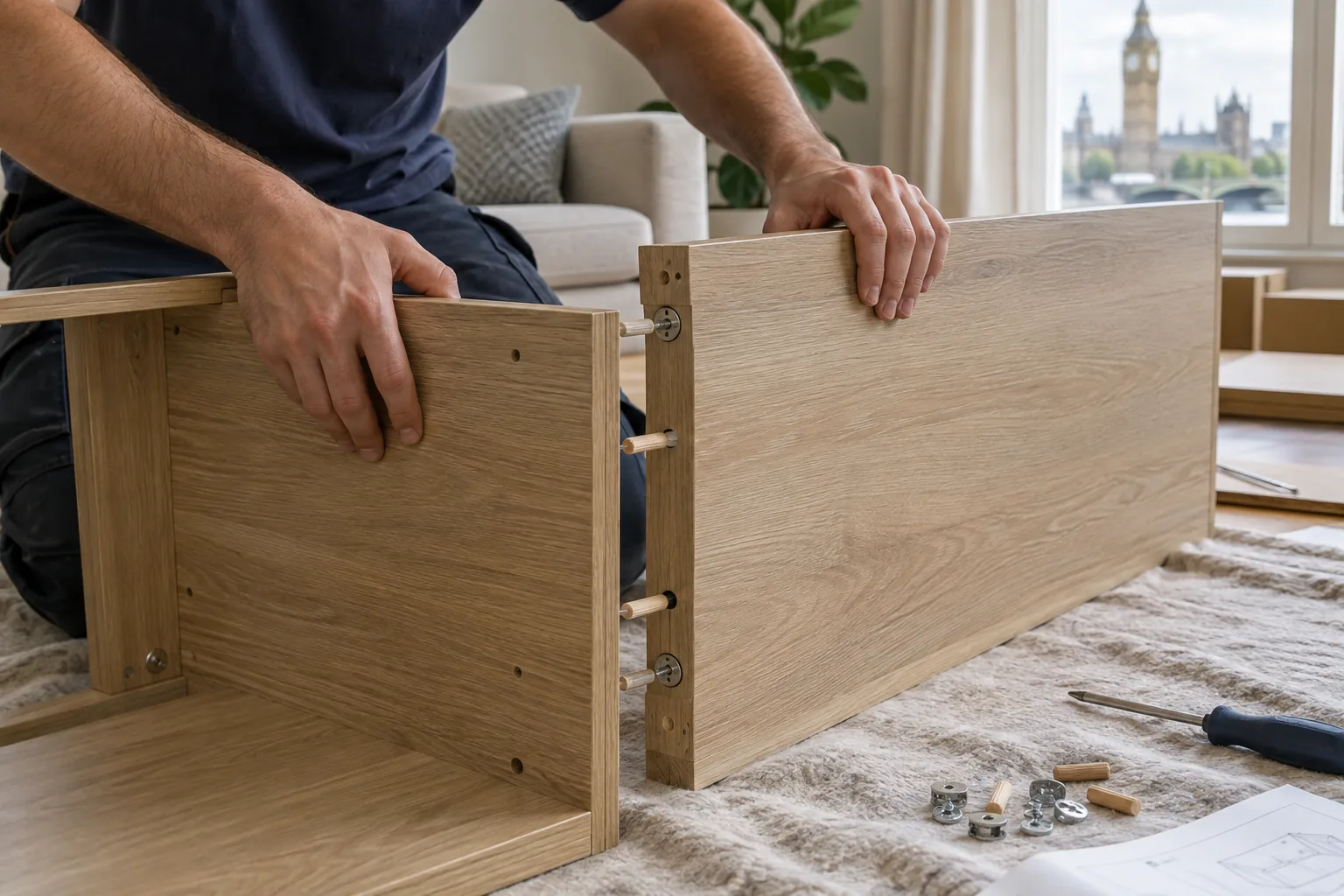
Handyman work may cover door and cupboard adjustments, loose handles, wall fittings, furniture assembly, selected sealant renewal, minor trim repairs and a prepared snagging list. Send close and wide photographs. Product dimensions, weight and instructions help assess installation, while wider views identify sockets, radiators, flooring and furniture that require clearance or protection.
Access information should cover stairs, lifts, shared entrances, parking or loading and the person who can approve changes. For bulky items, measure the route and inspect all packages. Handyman Express does not claim a Lee branch or guaranteed parking. Coverage and timing follow the address, work and schedule.
Create a safe working zone in occupied homes. Move fragile possessions, keep children and pets away from tools and agree where packaging can be placed. If a landlord or manager controls noise or common areas, share the requirements early. This prevents straightforward work being delayed by arrangements that could have been settled in advance.
For a recurring fault, explain when it appears, what movement or load triggers it and whether an earlier repair has been attempted. A short video may help describe movement or sound, but wide photographs are still needed. Do not conceal the original problem with a last-minute temporary repair.
Check every delivered product against its parts list before the appointment. Photograph damaged packaging or components and keep the instructions with the item. Measure long pieces against gates, stairs, lifts and final doors. Discovering an access or delivery problem early prevents paid fitting time being used to unpack something that cannot be completed.
Where the work sits close to fitted furniture, flooring or decorated detail, show those elements in the wider photograph and state what cannot be moved. This allows protection and clearance to be planned. It also helps separate a local repair from work requiring wider removal, preparation or another trade.
If another person will provide access, make sure they know the agreed task list and can contact the decision-maker. A key-holder who cannot approve placement or materials may allow entry without enabling useful progress. Clear authority is particularly important when a safe alternative differs visibly from the original request.