Orpington property notes
Repairs prepared for Orpington homes
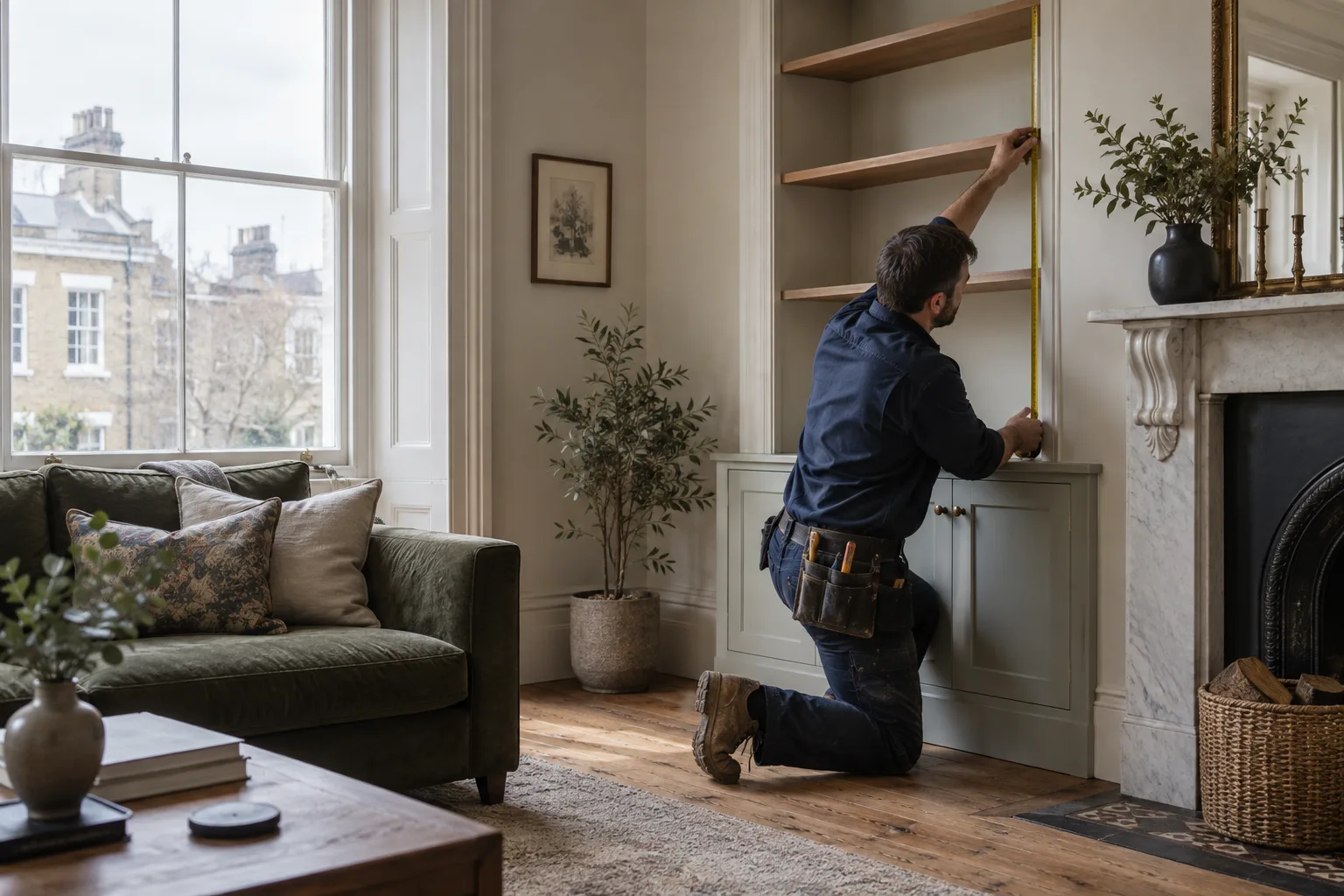
Orpington includes established houses, inter-war and post-war homes, purpose-built flats, maisonettes and newer developments. Extensions, loft changes and earlier refurbishment can introduce several wall and floor constructions within one address. Shelves, cabinets, mirrors and rails should be planned from the real substrate, its condition and the expected load rather than from the age of the street alone.
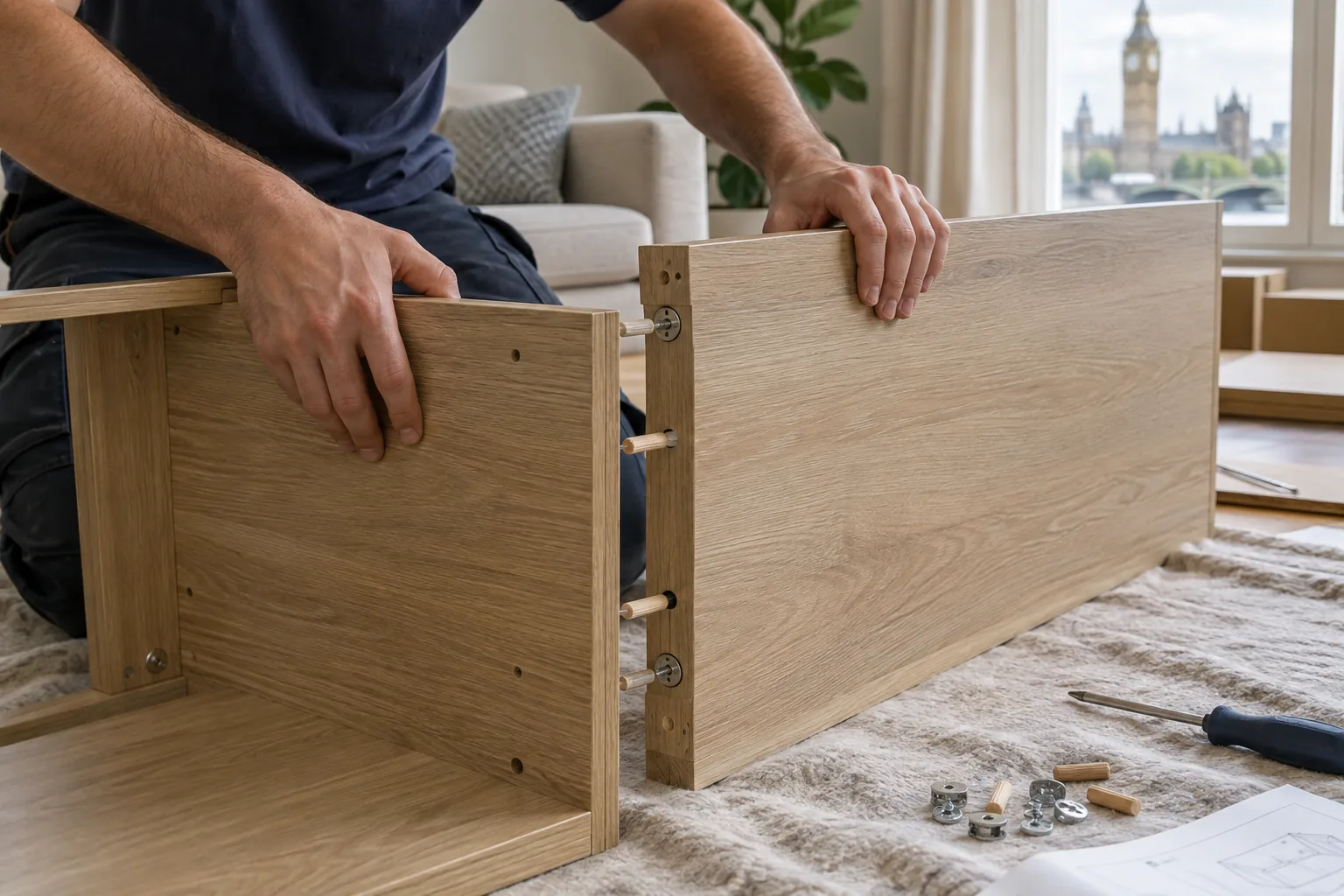
Typical handyman tasks may include easing doors, adjusting cupboards, securing handles, mounting supplied items, assembling furniture, replacing selected sealant and completing a prepared snagging list. Send a close photograph of each issue and a wider room view. Dimensions, quantities, product links and instructions support an informed first assessment and help identify suitable tools and protection.
Access may appear simple but still needs accurate detail. Mention driveway or controlled parking, steps, side gates, upper floors and any restricted working hours. For long or bulky products, measure the complete route through entrances, halls and stair turns. Handyman Express does not claim an Orpington office, reserved parking or guaranteed appointment slot; coverage depends on the address, scope and schedule.
Create a safe work area by moving fragile possessions and small furniture, keeping children and pets away from tools and planning a place for packaging. If a landlord, managing agent or freeholder sets rules for drilling, noise or waste, share them before booking so the visit can be planned within those limits.
Check delivered products against their parts list. Photograph transit damage and keep manuals, brackets and fasteners together. A supplied item may fit the measured wall but conflict with a socket, skirting, door swing or service route, so show the surrounding area as well as the intended centre point.
For intermittent movement, noise or moisture, note when the issue occurs and what load, use or weather is associated with it. A short video may help, but it should accompany photographs of the wider construction. Avoid making a temporary repair that conceals the original failure immediately before inspection.