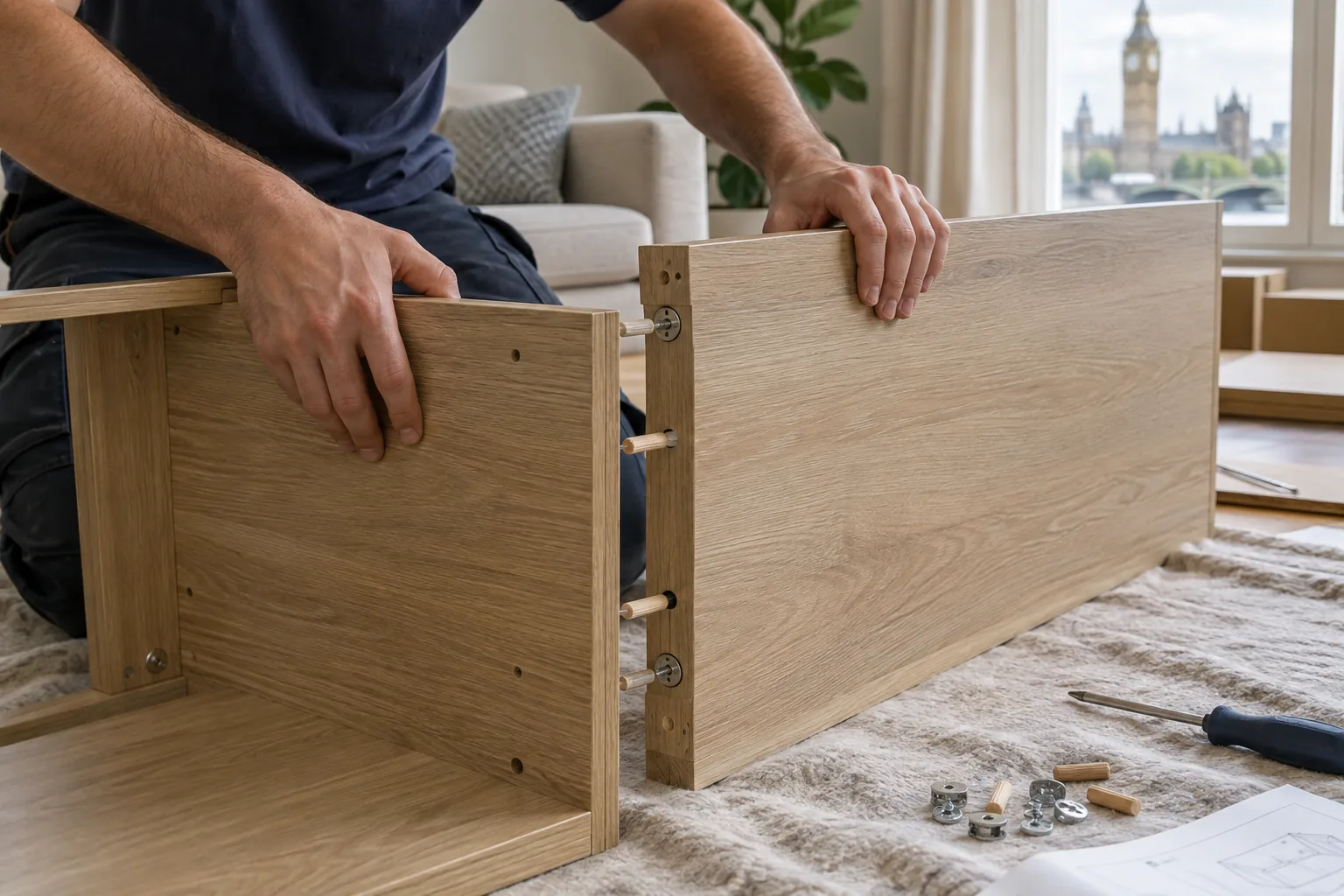
Mortlake property notes
Prepare supplied items and inspect the real surface
Open and inspect customer-supplied products before the appointment. Check the model, dimensions, finish, package count, panels, glass, specialist fittings and instructions. Photograph damage and contact the retailer while replacement remains their responsibility. Store components together without obstructing the room. When a product specifies wall restraint, retain the instruction and identify the proposed wall; generic pack fixings may be inappropriate for the construction found there.
Fixing demand comes from weight, leverage and movement. A projecting shelf, frequently used coat hook and hinged cabinet each load a wall differently. Masonry, dry lining, old plaster, tile and timber need distinct approaches, while old holes can leave weakened zones. Detectors and cautious checks help manage uncertainty but cannot map all concealed pipes, cables, voids or former repairs. Another position or product can be preferable to drilling without adequate confidence.
Before permanent work, agree height, level, spacing and clearance for doors, drawers, windows and controls. Afterwards, operate adjusted fittings through normal travel, test catches, inspect furniture for stability and assess mounted items for their intended everyday use. Return spare hardware and instructions. Small local filling can sometimes be included by agreement, but extensive preparation, texture or colour matching is decorating, and major timber work requires a suitable carpentry brief.