
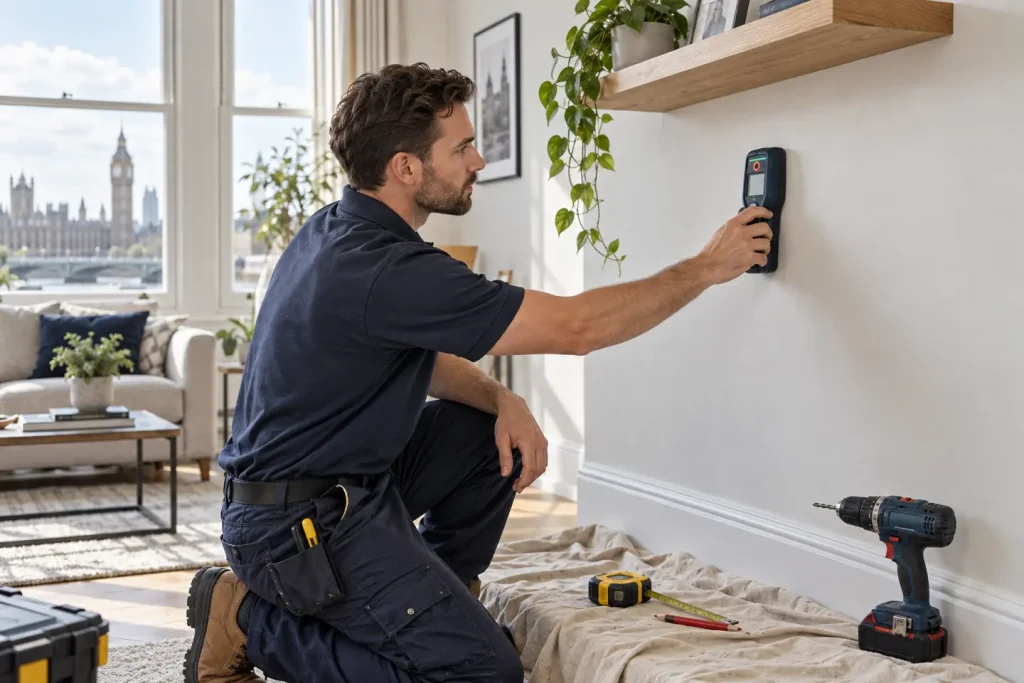
Mounting a shelf, television or heavy mirror looks straightforward until the wall is considered properly. Behind the painted surface may be brick, block, timber studs, plasterboard, cables or pipework. In many London properties, several construction methods can appear in the same room. Safe wall drilling starts by understanding that surface and choosing the fixing only after the checks are complete.
This guide outlines the questions a careful handyman should answer before drilling. It is not a substitute for specialist electrical or structural advice, but it will help you prepare a safer, more durable installation. For day-to-day mounting work, see our London handyman service.
Why the wall type matters
A fixing transfers the weight of an item into the structure behind it. Solid masonry can often accept an appropriate plug and screw, while plasterboard may need a cavity fixing or a secure connection to a stud. Lath-and-plaster walls in older homes behave differently again and can crack if handled aggressively.
The visible finish does not always reveal the full build-up. A skim coat may cover plasterboard, old plaster or insulated lining. Knocking on the wall can offer a clue, but it is not a dependable inspection on its own. A professional combines observation, a detector and cautious test work where appropriate.
Check the proposed position before reaching for the drill
Begin with how the finished item will be used. A shelf must clear doors and allow objects to be lifted safely. A mirror should suit eye level and lighting. A television needs a sensible viewing height, ventilation, cable access and enough clearance for the bracket.
Mark the full outline with low-tack tape or small pencil marks, not just one hole. Use a level and measure from fixed references such as the floor, an adjacent cabinet or the centre of a chimney breast. If a television is being wall mounted, confirm the screen dimensions and the bracket’s hole pattern before committing to the position.
Look for cables and pipes
Electrical cables and plumbing commonly run vertically or horizontally from visible fittings. The areas above, below and beside sockets, switches, radiators, taps and boilers deserve particular caution. However, old alterations do not always follow a predictable route, so visual assumptions are not enough.
A suitable detector can help identify live cables, metal and framing, but it must be used according to its instructions and checked across a wider area. Readings can be affected by foil-backed insulation, mesh, moisture and wall thickness. If the scan is unclear, stop and reconsider the position rather than treating the tool as a guarantee.
The safest hole is the one whose position, depth and purpose have all been checked before drilling begins.
Choose the fixing for the wall and the load
Fixings should be selected for both the substrate and the real working load. A light picture frame places a different demand on a wall than a cantilevered shelf full of books. Items that can be pulled, leaned on or moved create additional forces.
Manufacturer load figures are only useful when the correct fixing is installed in a sound, compatible material. Crumbly masonry, damaged plasterboard and joints between materials can reduce performance. For timber projects and made-to-fit shelving, our carpentry service may be a better starting point than treating the work as a simple drilling job.
Control drilling depth and dust
A depth stop or a clearly marked drill bit helps prevent unnecessary penetration. The bit type and drill mode should suit the material; hammer action is not appropriate for every wall or tile. Start accurately and avoid forcing the drill, which can enlarge the hole or damage the finish.
Protect floors and nearby furniture before work begins. A small dust extractor or vacuum held close to the bit can capture much of the debris. In occupied homes, careful preparation matters as much as the fixing because fine masonry dust travels quickly.
Take extra care around tiled surfaces
Bathroom and kitchen installations add the risk of cracking a tile or damaging hidden services. Marking and drilling must account for the tile material, grout lines, substrate and waterproofing. Drilling into a shower enclosure or wet area can compromise the system if the penetration is not planned and sealed correctly.
If the job involves bathroom accessories or a wall close to pipework, provide photographs and mention any known service routes. Our plumbing page can help you decide whether the work is a general fitting task or needs plumbing input.
Know when not to drill
Pause the work when a detector gives inconsistent readings, the surface is visibly unstable, the proposed fixing sits in a likely service zone, or the item is unusually heavy. Also stop if the wall may contain asbestos-containing materials or if a lease, landlord or building manager requires consent.
Large wall cabinets, heavy stone features, structural fixings and installations above people need a more detailed assessment. A professional should be comfortable saying that further information or a different specialist is required.
Information to send before a mounting job
- A wide photograph of the wall and nearby sockets, switches, radiators or taps.
- A close photograph of the surface and any existing holes or damage.
- The item’s dimensions, weight and manufacturer instructions.
- Photographs of the supplied bracket and fixings.
- Your preferred height and position.
- Any known wall construction, pipe routes or recent renovation work.
This information allows the visit to be planned without pretending that the wall can be fully assessed from a photograph. Final checks still happen at the property.
A careful installation should finish cleanly
Once fixed, the item should be level, stable and appropriate for normal use. Packaging and dust should be cleared, nearby finishes checked and any operating parts tested. The aim is not merely to put screws into a wall; it is to leave a secure installation that looks intentional.
If you need shelves, mirrors, rails or a television mounted in a London property, send us the item details and photographs. We can then discuss the scope, access and the right service before arranging the visit.