
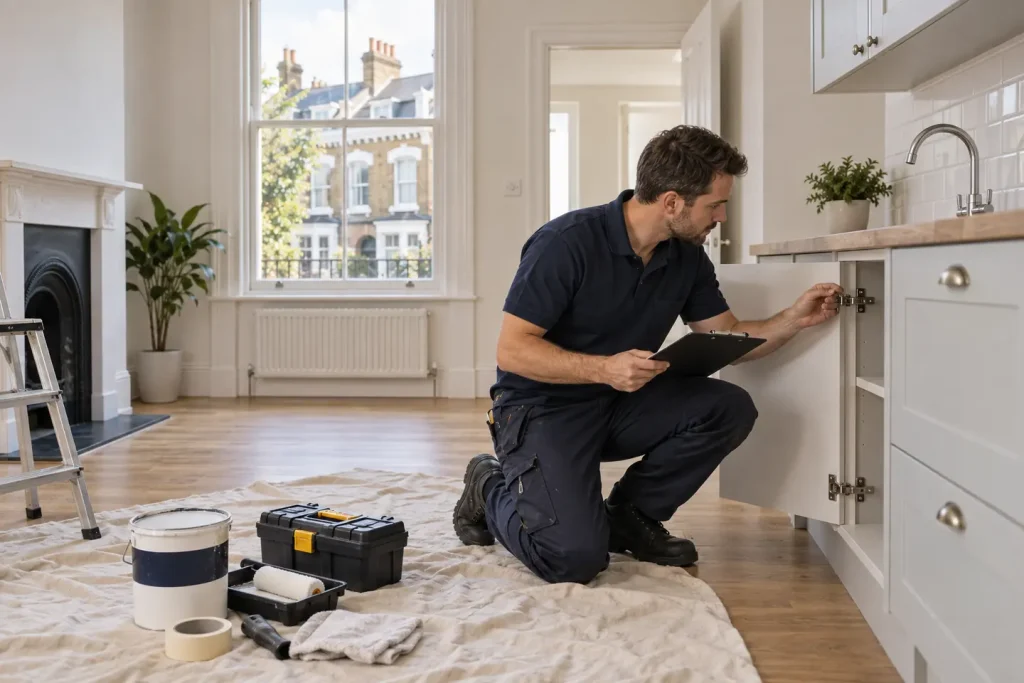
The best time to inspect a rental property is after one tenancy has ended and before the next move-in date becomes urgent. An organised end-of-tenancy maintenance checklist helps a London landlord separate cleaning, repairs, compliance work and improvements, so each task reaches the right person and the property is not delayed by avoidable surprises.
This guide focuses on practical condition checks and everyday repairs. It does not replace statutory safety inspections or professional advice. Where a qualified contractor is required, book that work separately and keep the relevant records.
Begin with a documented walk-through
Inspect the property in daylight if possible and move through it in the same order each time. Photograph every room from the doorway, then record specific defects at closer range. Compare the condition with the check-in inventory and note fair wear separately from damage or missing items.
Use a room-by-room list with four columns: issue, action, responsibility and priority. “Bedroom two door sticks” is an issue; “adjust hinges and confirm latch closes” is the action. Keeping these separate prevents vague instructions and makes quotes easier to compare.
Check safety and essential services first
Before cosmetic work, confirm that doors and windows close securely, water is running normally and there are no signs of active leaks, overheating or electrical damage. Test only the alarms and equipment you are competent and permitted to test, and arrange the required checks through appropriately qualified professionals.
Do not cover a damp mark with paint until the cause has been investigated. Likewise, a loose socket, gas concern, damaged fire door or structural movement is not a general handyman repair. Record it, make the area safe where appropriate and escalate it promptly.
Inspect kitchens systematically
Open every cupboard and drawer. Check hinges, handles, shelves and runners, then look at worktop joints, sealant lines and the area below the sink. Run taps and observe the waste connections for drips. Small leaks can damage the cabinet long before they become visible on the floor.
Check that supplied appliances are clean, stable and visibly undamaged, but use qualified appliance engineers when testing or repairing systems outside general maintenance. For taps, traps and straightforward water-related repairs, review our plumbing services.
Review bathrooms for water damage
Bathrooms need more than a quick visual clean. Inspect sealant, grout, tiles, bath panels, shower screens and extractor covers. Look for staining around the WC base, softness near the bath and swelling on adjacent skirting or door frames.
Failed sealant should be removed and renewed properly rather than layered over. Cracked tiles and loose fittings need assessment before the next tenant relies on them. Where plumbing or waterproofing is uncertain, identify the cause before decorating over the symptoms.
Test doors, windows and fitted furniture
Open, close and latch every internal door. Check handles, stops, hinges and privacy locks. Test windows and visible restrictors without forcing them. Fitted wardrobes and cupboards should open smoothly, with shelves secure and no sharp or exposed fixings.
Joinery repairs often become more expensive when a loose hinge continues pulling against damaged timber. Early adjustment may be all that is required. Our carpentry service covers practical repairs and alterations where general tightening is not enough.
Plan decorating around preparation
Scuffed walls do not always require a complete repaint. First assess whether marks will clean away, whether previous paint is still available and whether isolated touching-in will be visually acceptable. Where colours have faded or surfaces have multiple repairs, repainting a full wall may give a better result.
Preparation determines the finish. Fillings need to dry and be sanded; stains may require treatment; loose paint must be removed. Our London decorating service explains how preparation, protection and finishing are approached.
Do not let the move-in date turn every defect into an emergency. Prioritise safety and function, then schedule appearance work realistically.
Check furniture and loose items against the inventory
For furnished properties, check stability, missing components and obvious damage. Tighten loose fittings only when the furniture remains structurally sound. A damaged frame, broken glass or unstable tall unit may need replacement rather than a quick fix.
If replacement flat-pack furniture is waiting at the property, keep every box, fitting pack and instruction together. Our furniture assembly service can be included in a wider maintenance visit when the scope is clear.
Look beyond the rooms themselves
Check the entrance, hallway, external storage and any garden or balcony included in the tenancy. Make sure house numbers, door furniture and externally accessible locks are secure. Confirm bins, keys and access devices against the inventory.
In blocks, distinguish demised areas from communal parts before authorising work. Building-management rules may control access, noisy work and the treatment of external doors or windows.
Build a realistic works schedule
Arrange tasks in dependency order. Investigation comes before repair, repair before decoration, and decoration before final cleaning. Materials with drying or curing time need space in the programme. If several trades are involved, record who is responsible for protection and final making good.
A practical priority sequence is:
- Urgent safety and security issues.
- Leaks, loss of function and defects likely to worsen.
- Repairs needed before painting or cleaning.
- Furniture assembly and installations.
- Cosmetic improvements and final presentation.
Prepare one complete brief
Combine the room list, photographs, access instructions and deadline in one document or message. Include the property postcode, floor level, parking or loading restrictions and whether keys are held by an agent. State clearly which materials are already on site and which items need advice.
For work across the capital, our London service-area guide shows the locations covered. You can also review current pricing information before requesting a visit.
Finish with a second inspection
After the work and cleaning are complete, repeat the walk-through. Check that repaired items operate, surfaces are clean, leftover materials are labelled and keys are accounted for. Update the inventory photographs so the next tenancy begins with a clear record.
If you have a property between tenancies, send the maintenance list, photographs and target date. A clear brief helps us identify which jobs fit one handyman visit and which should go to a specialist.