Woolwich property notes
Repairs for newer apartments and established homes
Woolwich combines modern apartment developments with terraces, converted properties and older purpose-built housing. The practical difference is significant. A newer flat may have dry lining, service zones and formal management rules; an older home may contain solid masonry, traditional plaster and altered timber. A handyman should select the method from the actual surface, item and intended use, not from the postcode or visible finish.
Room use also affects the repair. A cabinet above a desk, a mirror on a circulation route and shelving beside a child’s bed carry different consequences if position, projection or support is wrong. Describe who uses the space, what the fitting will hold and whether nearby furniture needs to move. In an apartment, include any lease or management guidance supplied for wall fixing. These facts allow safety, practicality and appearance to be considered together before the first hole is made.
They also help decide which parts of the room need protection and when normal use can resume.
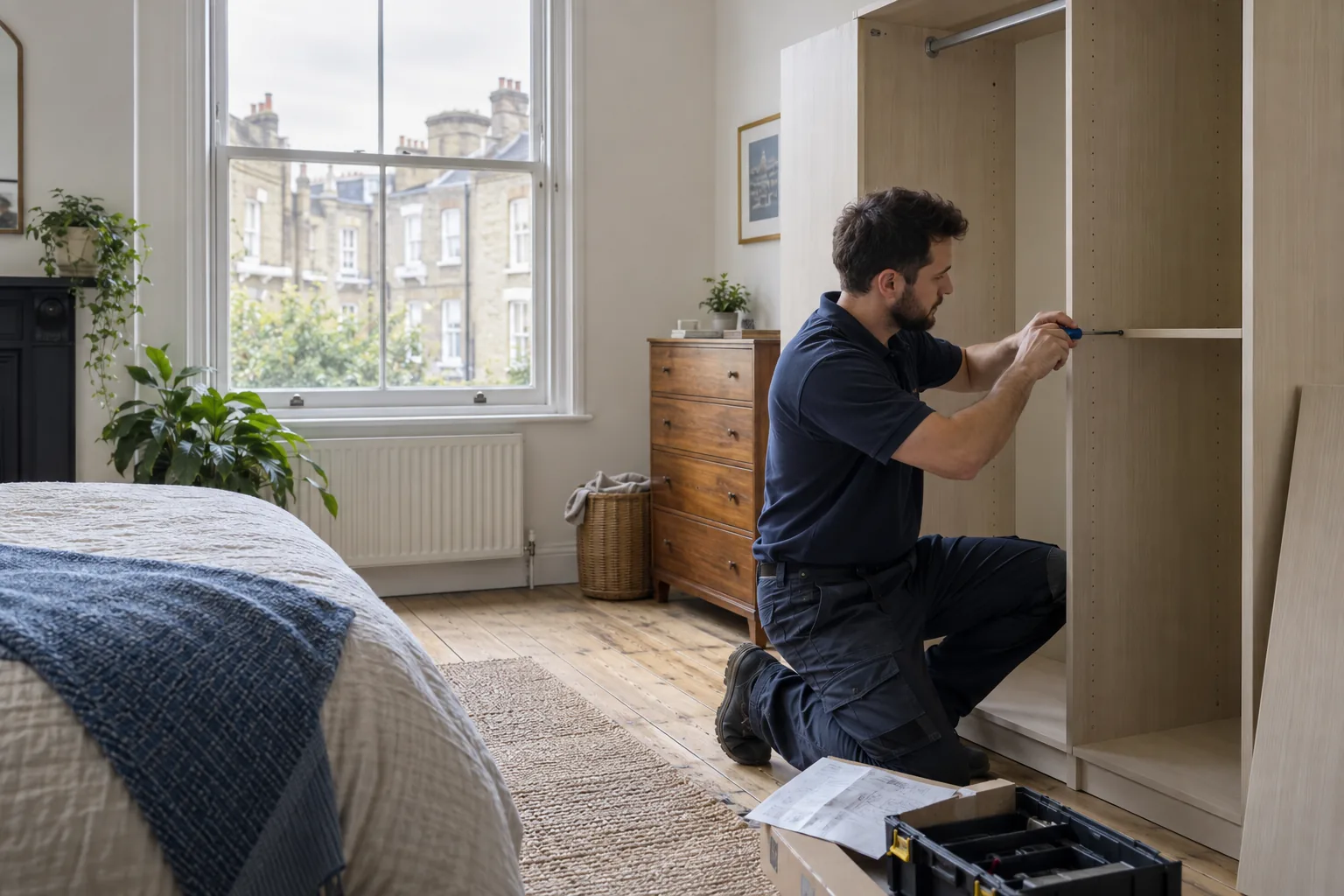
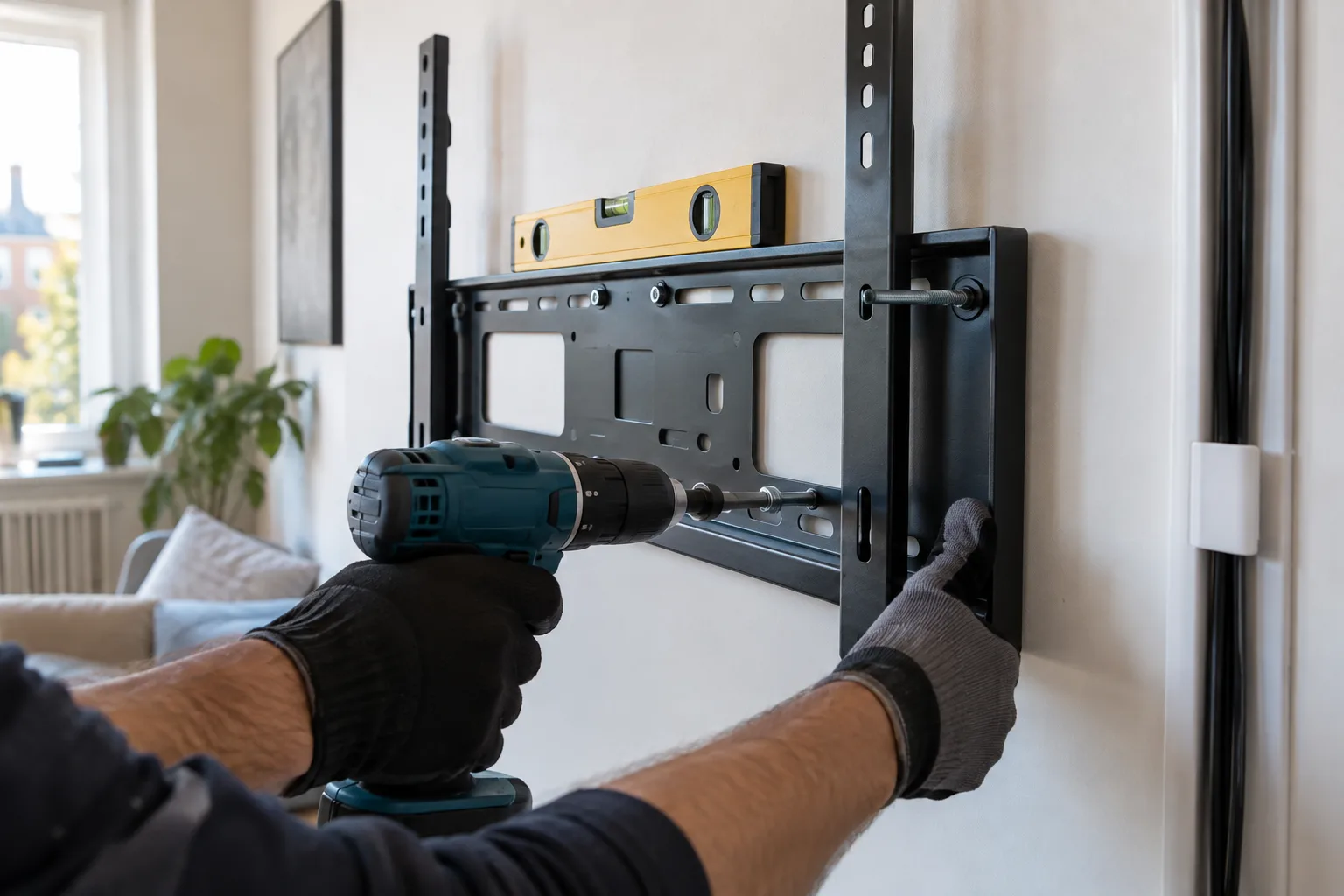
Send a numbered list, wide room views, close photographs, dimensions and product links. For mounting, include item weight and bracket details. For furniture, retain instructions and every package. For a recurring fault, explain when it happens. This information helps prepare tools and likely materials without pretending that photographs confirm hidden services, wall strength or the full cause.
Group compatible tasks where useful, but put safe access and everyday function first. Active leaks, appliance faults, major electrical work, gas and structural concerns need the appropriate specialist. A handyman may complete suitable making good once the source is resolved, but should not cover evidence of a continuing problem to make a snagging list appear complete.