
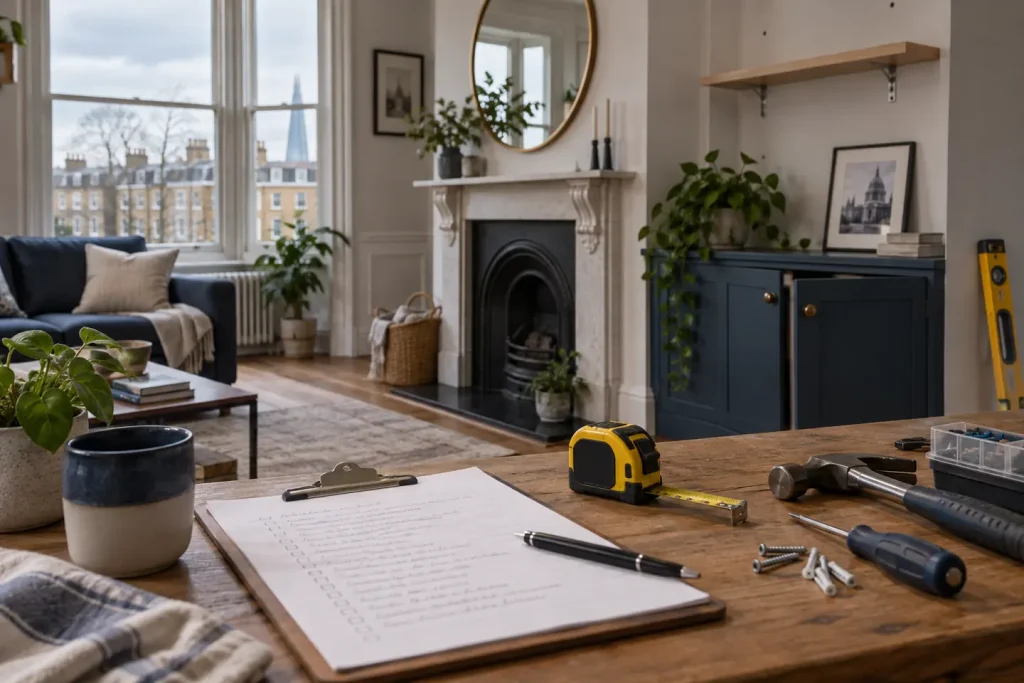
A handyman visit works best when the job is clear before the toolbox is opened. That does not mean writing a formal specification. A useful handyman job list is simply a practical record of what needs attention, where each issue is located and what a satisfactory result looks like. For London homes, where parking, access and room sizes can affect the visit, a few minutes of preparation can save a surprising amount of time.
This guide explains how to prepare a useful list, which photographs and measurements help, and how to decide whether several small jobs belong in one appointment. If you already know the work you need, you can also review our general handyman service or send the details through the quote form.
Start with the result, not the tool
Describe the outcome you want in ordinary language. “Secure the loose shelf in the front bedroom” is more useful than “bring a drill”. The first description tells the handyman where the job is, what is wrong and what must be achieved. It also leaves room for the right fixing to be selected after the wall has been checked.
For every item, note three things:
- Location: the room and the exact item, such as the cupboard beside the cooker.
- Problem: what is loose, damaged, leaking, sticking or unfinished.
- Desired result: repair, replacement, adjustment, installation or advice.
A short entry such as “hallway — coat rail pulling away from plasterboard — refit securely for daily use” gives much more useful information than “fix rail”.
Group the list by room
Walking repeatedly between rooms wastes time and makes it easier to overlook a small task. Grouping work by room creates a natural route through the property. Begin at the entrance, move through shared rooms, then bedrooms, bathrooms and any outdoor space.
Within each room, put related jobs together. A living-room list might include mounting a mirror, adjusting a door, securing a bookcase and filling the old fixing holes. If the visit includes flat-pack items, separate them clearly and link to our furniture assembly service when you need a fuller description of what can be assembled.
Take photographs that answer practical questions
Useful photographs do more than prove that a problem exists. They help show scale, access and surrounding materials. Take one wider photograph of the whole area and one close-up of the defect. For an installation, photograph both the item and the wall or surface where it will go.
Good photographs can reveal whether a ladder may be required, whether furniture must be moved, or whether a fixing sits close to plumbing or electrical points. When requesting TV installation, include the television model, bracket, wall, nearby sockets and the route you would prefer for visible cables.
A clear photograph should show the job in context, not only the damaged corner.
Record measurements without guessing
Measurements are especially helpful for shelves, blinds, rails, furniture and replacement fittings. Record width, height and depth in millimetres where possible, and label each figure. A number without a label is easy to misread.
For wall-mounted items, also note the proposed height from the floor and whether the position must align with existing furniture. Measurements sent before a visit are useful for planning, but final positions and concealed services should still be checked on site.
List the materials already at the property
If you have bought a fitting or replacement part, keep its fixings, instructions and packaging together. Add the product name and model to your list. Do not assume that the screws included in a box are appropriate for every London wall; many homes combine masonry, plasterboard, timber and older plaster within the same property.
For each customer-supplied item, check that all visible parts are present and that the product is not damaged. If you are unsure what to buy, say so. It is better to request advice than purchase an unsuitable part and lose time returning it.
Separate repairs from investigation
Some jobs have a clear cause: a loose handle needs tightening, or a flat-pack cabinet needs assembling. Others need diagnosis. A damp patch, recurring loss of water pressure or a socket that becomes warm should not be written as a simple cosmetic repair.
Mark uncertain items as “investigate first” and describe when the problem happens. Plumbing concerns may need the focused experience described on our plumbing service page. Electrical, gas, structural or major water-ingress issues may require a specialist rather than general handyman work.
Prioritise the jobs honestly
Use three simple priorities: essential, important and optional. Essential work affects safety, security or the basic use of the property. Important work is disruptive or likely to worsen. Optional work can be completed if the agreed jobs take less time than expected.
This prevents a long list from creating an unrealistic expectation. It also helps the team plan a sensible appointment and discuss how charging applies. Our handyman prices page explains the current structure, but the actual duration still depends on access, condition and the work discovered on site.
Prepare access before the appointment
Clear fragile objects and enough floor space to work safely. Make sure keys, entry codes and parking information are available. In flats, check any building rules covering contractor access, lift use or noisy work. Tell the team in advance if the property is above ground level without a lift or if loading is restricted.
Keep pets away from the work area and let the handyman know about vulnerable surfaces, hidden underfloor heating or recently decorated walls. These small details protect the property and reduce interruptions.
A simple job-list format to copy
- Room and item: kitchen, wall cupboard beside the window.
- Issue: right-hand door has dropped and catches the frame.
- Result wanted: realign the door and check the hinges.
- Photo: one wide image and one close-up of the hinges.
- Priority: important.
- Materials on site: none; existing hinges to be assessed.
Repeat that structure for each task, then send the list with your postcode and preferred timing. A well-prepared brief does not make the job rigid; it gives the handyman a reliable starting point and keeps the visit focused on the work that matters most.
Ready to turn the list into an appointment? Send your job details and photographs, and we will help define the next practical step.