Acton property notes
Turn an Acton task list into a workable brief
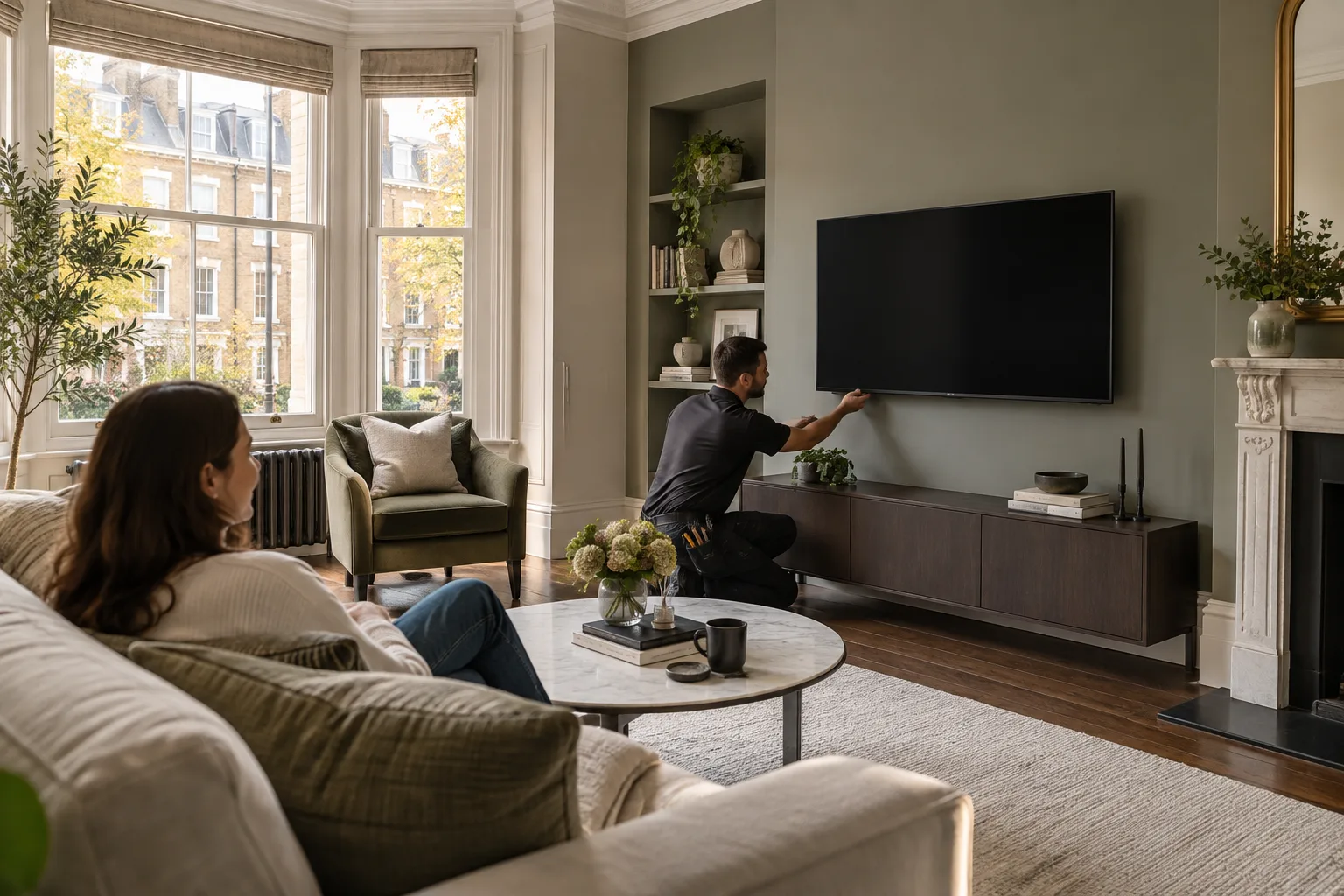
Acton properties range from terraces and subdivided houses to maisonettes and purpose-built flats. Rooms that look similar can conceal masonry, old plaster, dry lining, timber grounds or earlier repairs. The appropriate approach to a shelf, blind, cabinet or television bracket depends on the item, expected load and actual surface condition. A postcode or assumed building age cannot settle that decision.
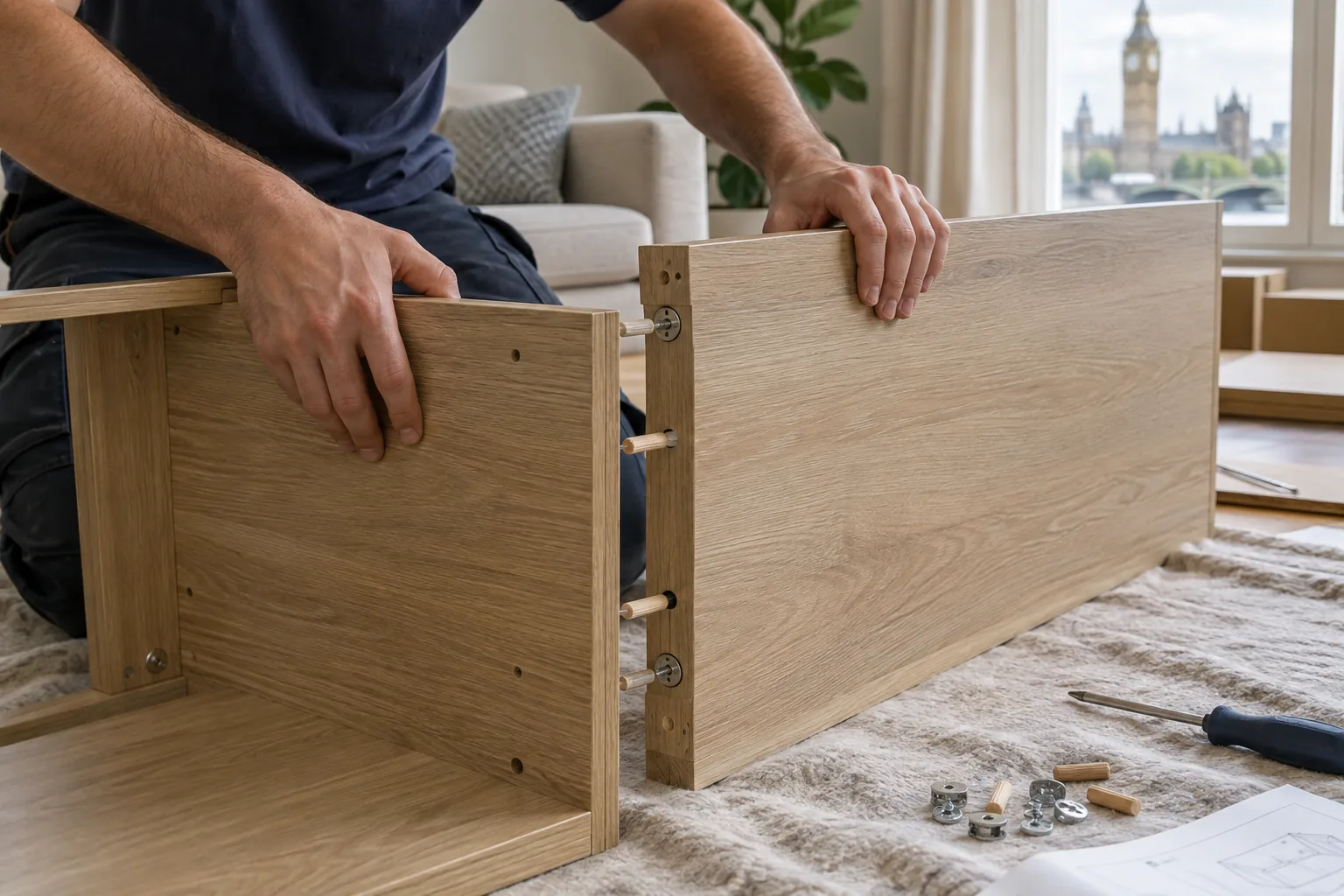
Describe each result rather than naming only a room. “Adjust the bedroom door, assemble one supplied wardrobe and fit two curtain poles” gives useful quantities and outcomes; “do the odd jobs” does not. Add close photographs of loose hinges, failed sealant or damaged holes, plus wider views showing sockets, radiators, windows, furniture and the space available for safe handling.
Mention what has already been attempted and leave the fault visible where safe. Repeated tightening may enlarge a fixing hole, while filling immediately before attendance can hide weak material. A door that catches may involve hinges, frame alignment, decoration or floor clearance. Knowing when the symptom occurs helps distinguish adjustment from a wider joinery or moisture problem.
Provide the full Acton address, floor and route from a lawful stopping point. Note controlled entry, stairs, lift dimensions, narrow landings and any building rules. Long components must turn through the whole route, not simply fit through the front door. Handyman Express does not claim an Acton office, private parking or automatic access to managed premises.